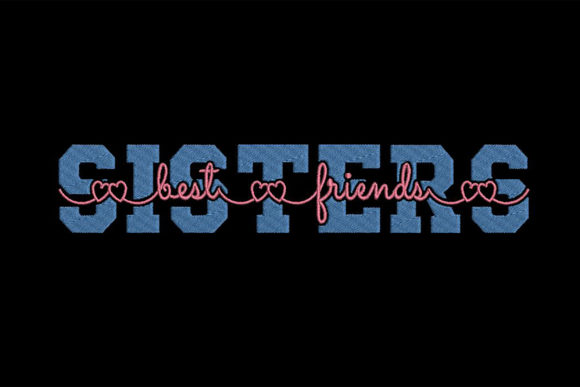
Sisters Best Friends: A Craft Fair Embroidery Review
As an experienced embroidery designer preparing for a busy weekend craft fair, I evaluate every machine embroidery design through a lens of profitability, production speed, and customer appeal. When reviewing Sisters Best Friends, my immediate assessment focuses on its potential as a high-turnover handmade product. The description highlights a two-color palette with only one thread change, which is music to the ears of any commercial embroidery business owner or Etsy seller. In a booth environment where efficiency dictates profit margins, a design that minimizes machine downtime while maximizing emotional connection is invaluable. This review breaks down how this specific family quotes embroidery file performs in real-world applications, from tote bag designs to tea towel embroidery, ensuring your booth display stands out.
First Impressions and Market Viability
The title Sisters Best Friends immediately signals a sentimental, relational niche that consistently drives sales in the handmade market. Based on the simplicity of the color scheme and the "easy project" designation, this design likely leans toward a modern farmhouse or clean minimalist aesthetic rather than an ornate, vintage style. For craft fair sellers, this versatility is crucial. It avoids being overly trendy, allowing it to appeal to a broad demographic ranging from teenagers buying matching accessories to grandmothers purchasing gifts for grandchildren.
From a production standpoint, the single thread change is the defining feature. In commercial embroidery, every stop and start costs money. A design requiring only one color break allows for rapid batch production. You can hoop multiple items, run the first color across all of them, swap the thread once, and finish without constant machine intervention. This makes Sisters Best Friends an ideal candidate for assembly-line stitching when stocking up for holiday markets or fulfilling custom Etsy orders. The ability to choose fabric and thread colors to suit personal taste further enhances its viability as a customizable small shop product.
Best Product Applications for Booth Displays
Not every embroidery file translates well to every substrate. When planning my table display, I categorize designs by their visual weight and intended use. Here is how Sisters Best Friends evaluates across popular craft fair categories:
- Tote Bag Design: This is arguably the strongest application. Canvas totes provide a stable, flat surface perfect for text-based family quotes. The two-color limitation works beautifully here, offering high contrast against natural cotton or colored canvas. As a tote bag design, it serves as both a functional item and a walking advertisement for your brand at the market.
- Tea Towel Embroidery: Kitchen textiles are staple sellers. Because this is an easy project suited for beginners and advanced stitchers alike, it likely lacks excessive density that could pucker lightweight linen. However, verify the stitch density before committing to waffle-weave textures, as simple lettering can sometimes get lost in deep fabric texture.
- Apron Embroidery: Matching sister aprons are a fantastic upsell opportunity. The design’s sentiment fits perfectly on the bib or lower pocket area. Since aprons are often made of denim or twill, ensure your stabilizer choice supports crisp lettering on these heavier fabrics.
- Embroidered Patches: If the design size permits, creating patches adds a low-cost, high-margin impulse buy to your booth. Patches allow customers to purchase the sentiment even if they cannot afford a finished bag or pillow.
- Pillow Covers and Fabric Pouches: These items benefit from the customizable nature of the design. Offering pre-made samples in neutral tones alongside a swatch book for custom thread colors can significantly increase buyer engagement.
Production Practicalities and Technical Considerations
While Sisters Best Friends is marketed as an easy project, professional results require technical diligence. The fact that it uses only two colors suggests open lettering or satin stitch elements rather than dense fill areas. This is generally positive for production speed but introduces specific risks regarding clarity and registration.
Evaluating Stitch Density and Fabric Texture
Before listing this as a finished product, you must inspect the stitch density. Lightweight designs can look cheap or fail to register on textured surfaces like terry cloth or slubbed linen. If the lettering is too thin, it may disappear into the weave of a tea towel. Conversely, if the design has been digitized with high-density satin stitches for durability, test it on scrap fabric to ensure it does not cause puckering on lighter materials. Always confirm the hoop size requirements match your equipment capabilities; nothing halts production faster than realizing a design exceeds your largest available hoop after purchasing the digital embroidery file.
Thread Contrast and Color Selection
With only two colors, contrast is everything. A dark navy thread on black fabric will render the sentiment invisible in dimly lit craft fair halls or poorly photographed online listings. When selecting thread colors to suit your taste, prioritize readability over subtle aesthetics. Test combinations on actual garment scraps, not just digital mockups. Remember that sheen varies by thread brand; a matte cotton thread reads differently than high-sheen rayon or polyester. For commercial embroidery products intended for photography, higher contrast usually converts better in thumbnails.
Visual Merchandising and Customer Engagement
In a crowded handmade market, visual hierarchy determines what gets picked up. Sisters Best Friends relies entirely on typography and sentiment, meaning legibility is your primary merchandising tool. Display finished products at eye level and ensure adequate lighting. Because the design is text-heavy, customers need to be able to read it from three feet away to be drawn in for a closer look.
For Etsy sellers and digital sellers, printable mockups are essential, but they must be accurate. Do not rely solely on software-generated previews. Create at least one real sample to photograph. Authentic photos showing the texture of the stitches and the drape of the fabric build trust. Highlight the customization aspect in your listing descriptions; phrases like "choose your thread colors" transform a standard product into a personalized gift. This directly impacts perceived value and justifies premium pricing for handmade goods.
Designer Notes for Safe Commercial Use
Before turning Sisters Best Friends into inventory, adhere to these professional best practices to protect your business and reputation:
- Verify Licensing: Never assume a design includes commercial rights for finished products. Check the license terms explicitly. Some designers permit selling physical embroidered items but prohibit using the design assets for print-on-demand or digital resale.
- Test on Target Substrates: Do not skip the test stitch-out. Run the design on the exact fabric, stabilizer, and needle combination you intend to sell. Adjust tension or pull compensation if letters gap or distort.
- Check Small Lettering Clarity: If resizing the design for smaller items like pouches or caps, ensure the text remains legible. Reducing a design below 70% of its original size often causes stitch overlap and illegibility. Caps present additional challenges due to curvature; verify the design is cap-compatible or stick to flat surfaces.
- Batch Production Strategy: Leverage the single thread change. Hoop five to ten items at once if your machine allows multi-position hooping. Run color one, trim, swap thread, and run color two. This reduces handling time per unit significantly compared to completing each item individually.
- Document Your Settings: Keep notes on which stabilizer worked best for each fabric type. Consistency is key for brand reputation. If a customer returns six months later for a matching set, your tea towel embroidery should look identical to their previous purchase.
Ultimately, Sisters Best Friends represents a smart addition to a craft fair lineup when executed with professional care. Its efficiency in production, combined with the enduring market demand for family-centric sentiments, makes it a reliable performer. By respecting the technical nuances of stitch density, fabric compatibility, and color contrast, you can elevate this simple two-color design into a best-selling staple of your embroidery business.