American Eagle Flag Stylized: Merch Review
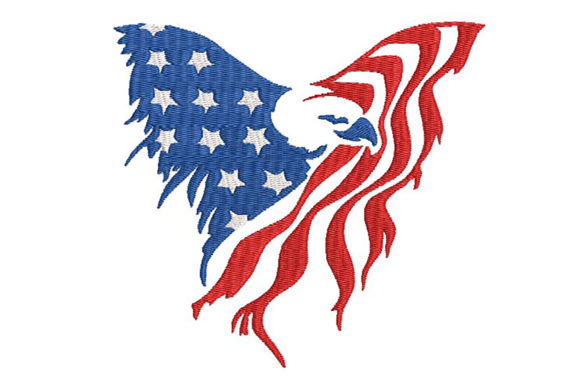
As an embroidery designer focused on commercial applications and small business branding, I approach every new machine embroidery design with a critical eye toward production viability. When evaluating the American Eagle Flag Stylized for potential use in branded merchandise, my primary concern is not just aesthetic appeal, but how the digitizing translates across different substrates and business contexts. This design, featuring a stylized flag and eagle motif, presents unique opportunities for Independence Day promotions and patriotic branding, but it requires careful consideration regarding placement and fabric choice to ensure professional results.
First Impressions: Visual Personality and Brand Fit
The immediate impression of American Eagle Flag Stylized is one of bold, accessible patriotism. The term "stylized" suggests a departure from hyper-realistic detail in favor of clean lines and graphic clarity. For small business owners, this is often preferable to photorealistic designs because graphic styles tend to register better at smaller sizes and on textured fabrics. The visual personality leans towards classic yet modern Americana, making it versatile enough for a rustic bakery, a local craft brewery, or a boutique offering handmade goods.
However, the stylized nature means the design relies heavily on color blocking and shape definition rather than intricate shading. From a brand identity perspective, this creates a friendly and approachable vibe rather than an austere or governmental look. It feels suitable for customer-facing merchandise like tote bags and caps, where the goal is engagement and celebration rather than formal uniformity. For Etsy sellers and creative studios, this balance allows the design to function as a seasonal accent without overpowering your core brand assets.
Evaluating Hoop Sizes for Commercial Application
This embroidery file is provided in three distinct sizes: 4×4, 5×7, and 12×8″ hoops. Understanding the commercial application for each size is vital for maximizing ROI on your production time.
- 4×4 Hoop Size: This is the workhorse size for small business merch. At this scale, the stylized eagle and flag must maintain legibility. This size is ideal for left-chest logos on polos, sleeve accents on work shirts, or as a standalone embroidered patch. Because the description notes this is an easy project suitable for beginners, the stitch density at this size should be manageable for single-needle machines, reducing the risk of thread breaks during high-volume runs.
- 5×7 Hoop Size: This mid-range size offers the most versatility for apron embroidery and back-of-cap designs. It provides enough canvas for the stylized elements to breathe without becoming overwhelming. For a café or florist, this size works beautifully centered on a bib apron or as a prominent feature on a canvas tote bag. It strikes the perfect balance between visibility and wearability.
- 12×8″ Hoop Size: Large format embroidery demands confidence. This size is best reserved for statement pieces such as jacket backs, large tote bags, or decorative pillows. In a commercial setting, use this size sparingly. While visually striking, larger designs consume significant thread and stabilizer, increasing the cost per unit. Ensure your pricing model accounts for the extended run time associated with this hoop size.
Real-World Performance Across Business Verticals
When integrating American Eagle Flag Stylized into a product line, context dictates success. For a local pet brand, the 4×4 version could serve as a bandana accent for July 4th sales, leveraging the patriotic theme to drive seasonal revenue. For a creative studio or maker space, the 5×7 version adds a touch of heritage to workshop aprons, reinforcing a sense of American craftsmanship.
In the realm of custom apparel, this design performs well on cotton and poly-cotton blends commonly used in staff uniforms. The stylized aesthetic typically utilizes satin stitches for borders and fill stitches for interior areas, which sit smoothly on standard uniform fabrics. However, for cap embroidery, caution is necessary. Caps present a curved, structured surface that can distort wide horizontal elements like flags. Before committing to a production run on headwear, you must verify that the digitization includes appropriate compensation for the cap's curvature.
For handmade brands selling on platforms like Etsy, this design can elevate product photography. Using the finished product in lifestyle shots helps buyers visualize the item in use. A stylized eagle on a linen tea towel or a denim jacket creates an emotional connection that drives sales, particularly around national holidays. Just remember that while the design is marketed as a freebie, the value you create comes from your unique application and presentation.
Critical Production Considerations and Limitations
Despite being labeled as beginner-friendly, commercial use requires adherence to best practices. There are specific scenarios where American Eagle Flag Stylized should be used with extreme care:
- Textured Fabrics: If applying this to terry cloth towels or fleece, the stylized details may get lost. You will likely need to add a topping stabilizer to prevent stitches from sinking into the pile.
- Frequent Washing: For items like chef coats or barista aprons that undergo industrial laundering, ensure the stitch density is sufficient to withstand abrasion. Stylized designs sometimes have open areas; if the underlay is inadequate, the fabric may show through after repeated wash cycles.
- Dark Uniforms: Contrast is key. If stitching a red, white, and blue design on a navy uniform, ensure there is adequate contrast between the blue elements of the design and the garment. Without it, the eagle loses definition. Test thread colors against the actual garment fabric before production.
- Small Patch Production: When scaling down to create patches, fine details in the eagle’s feathers or flag stars may merge. Always test the smallest intended size on felt or twill to confirm clarity.
Designer Notes: Ensuring Professional Results
Before loading this digital embroidery file into your machine for a client order or inventory build, follow these professional verification steps. Although the product description highlights ease of use, commercial standards demand validation.
Always create a printable mockup or sew-out sample first. Do not rely solely on screen visualization. Stitch the design in black and white initially to evaluate the structural integrity of the digitizing without the distraction of color. This reveals whether the registration holds up and if the pull compensation is adequate for your specific fabric texture.
Verify the licensing terms explicitly. While the prompt mentions getting this amazing freebie, "free" does not always equate to "commercial license included." As a business owner, you must confirm you have the right to sell products bearing this design. Protecting your business from copyright issues is as important as the quality of your stitching.
Finally, consider the stabilizer strategy. For the 12×8″ version, a heavy-duty cut-away stabilizer is non-negotiable to prevent puckering on lighter weight garments. For the 4×4 patch application, tear-away may suffice depending on the backing material. Document your successful combinations of needle size, thread type, and stabilizer weight to streamline future production runs of this American Eagle Flag Stylized design.
By treating this design as a professional asset rather than just a holiday decoration, you can leverage its stylized charm to build recognition and trust. Whether adorning a boutique tote bag or a service industry uniform, the success lies in matching the design's capabilities with the right substrate and application. Happy stitching, and may your commercial projects be as outstanding as your creativity.