Baby's 1st Christmas Ornament: A Maker's Review
As an embroidery designer preparing for the upcoming holiday craft fair season, my studio table is currently covered in fabric swatches, stabilizer rolls, and test stitches. When evaluating a new machine embroidery design for commercial production, I look beyond digital aesthetics to determine real-world viability. The "Baby's 1st Christmas Ornament" concept is a perennial bestseller, but translating this sentimental title into a physical craft fair product requires critical assessment. Before loading the embroidery file into my machine for batch production, I must determine if this specific iteration of the design possesses the visual weight and technical integrity required to stop shoppers at a busy market booth.
Evaluating Visual Impact and Market Appeal
The first impression of any handmade product at a craft fair happens from three feet away. For a Baby's 1st Christmas Ornament design, the aesthetic usually leans toward soft, elegant, and nostalgic. However, as a vendor, I need to know if it reads clearly against the visual noise of a crowded venue. Does the design feel premium and boutique-ready, or does it look like generic clip art? A successful ornament design for commercial use should balance delicate details with bold enough elements to be recognized instantly. If the lettering is too wispy or the iconography too intricate, it will disappear when displayed on a vertical rack or hung from a tree branch in my booth.
From a sales perspective, this category targets high-emotion buyers: new parents, grandparents, and gift-givers seeking meaningful keepsakes. The design must communicate "heirloom quality" rather than "mass-produced novelty." As an Etsy seller or boutique maker, your reputation relies on offering items that feel distinct. I evaluate whether this specific artwork allows for personalization without compromising structural integrity. Can I easily add a name and year below the main motif without re-digitizing? If the spacing feels cramped or the baseline is uneven, it fails the practical test for custom orders, which are the primary revenue driver for this niche during Q4.
Best Product Applications for Holiday Markets
While the title specifies an ornament, experienced makers know that versatility drives profit. I assess how this design translates across different blanks to maximize my return on time investment.
- Traditional Ornaments: This is the obvious choice. On ceramic or wood discs, the design needs clean edges and minimal jump stitches. On fabric ornaments filled with batting, the stitch density must be sufficient to prevent the fabric from puckering while remaining light enough not to weigh down the tree branch.
- Tea Towel Embroidery: A Baby's 1st Christmas tea towel is a massive seller. Here, the design serves as a focal point. I look for open space around the central motif to accommodate terry cloth texture. Dense fill stitches can cause tunneling on towels, so a design optimized for linens is superior for this application.
- Tote Bag Design: Market bags and canvas totes make excellent giftable items. The design must scale up effectively. Tiny details that work on a 3-inch ornament often get lost on a larger tote. I prefer versions of this design with bolder outlines for bag applications.
- Embroidered Patches: Creating iron-on patches allows customers to customize their own baby gear. For patches, the design requires a solid border and high contrast thread colors. Intricate shading rarely translates well to patch format; simplified, graphic versions perform better here.
- Apron Embroidery: Holiday baking aprons for mom or grandma pair perfectly with this theme. Placement is key; the design should sit above the waistline but below the bib area to remain visible when worn.
Technical Production and Stitch Integrity
A beautiful screen mockup means nothing if the needle breaks every fifty stitches. Before committing to a full production run, I scrutinize the technical aspects of the digital embroidery file. Craft fairs demand efficiency; I cannot afford excessive thread trims, hoop burns, or registration errors that lead to wasted blanks.
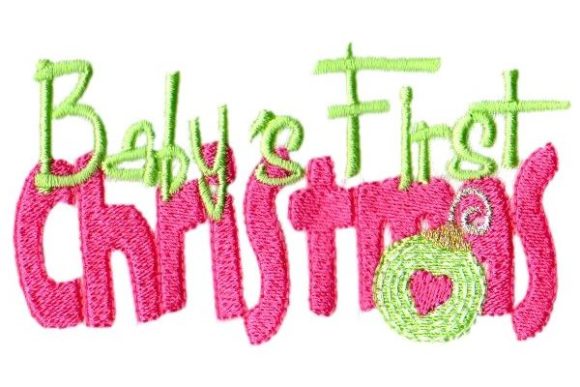
I pay close attention to small lettering. Many "Baby's 1st Christmas" designs feature script fonts that are visually stunning on screen but physically impossible to stitch cleanly at small sizes. If the satin columns are thinner than 0.8mm, they risk cutting through delicate fabrics or becoming illegible. Similarly, dense fill areas can distort lightweight ornament fabrics. I always check the underlay type; a center walk or edge run underlay is essential for maintaining shape on stretchy knits or textured wovens.
For those selling finished products, consistency is brand equity. If I am making twenty identical ornaments for my table, the design must run predictably every time. Variations in pull compensation can cause letters to shift, resulting in mismatched sets that must be sold as seconds. I also verify the hoop size requirements. Designs that utilize the maximum area of a standard hoop leave little room for alignment marks, making multi-placement projects like matching family sets significantly more difficult and risky.
Critical Use Notes for Makers
Even the most professionally digitized commercial embroidery files require operator judgment. Based on years of testing holiday designs, here are specific cautions for this product category:
- Fabric Texture Matters: Avoid running fine detail designs on high-pile terry or minky without a water-soluble topping. The fibers will push through the stitches, obscuring the "Baby's 1st Christmas" text and ruining the heirloom effect.
- Thread Contrast on Dark Fabrics: White or cream thread on red or green fabric is classic, but ensure adequate density. Light thread on dark fabric often requires extra passes to achieve opacity. Test on scrap fabric first to avoid shadowing.
- Stabilizer Selection: Do not rely solely on tear-away for woven fabrics if the design has heavy satin borders. Cut-away provides permanent support and prevents distortion after washing, which is vital for tea towels and aprons intended for actual use.
- Curved Surfaces: If adapting this design for caps or curved ornaments, remember that flat digitizing distorts on curves. You may need to adjust vertical spacing or use a specialized cap frame to maintain proportion.
- Licensing Verification: Always confirm commercial licensing terms before selling. Some designers restrict the sale of finished goods or limit quantity. Protect your business by ensuring your design assets are cleared for the intended volume of sales.
Maximizing Booth Display and Online Listings
The final evaluation occurs in presentation. How does this embroidered item photograph? For Etsy sellers, the printable mockup or listing photo is the primary sales tool. A Baby's 1st Christmas Ornament design should be photographed in natural light, styled with complementary props like pine sprigs or neutral ribbon, to convey scale and texture. Flat lays often fail to show stitch dimension; angled shots capture the sheen of rayon or polyester threads better.
At the craft fair, display hierarchy matters. Place the highest-contrast, most legible versions of the design at eye level. Use signage that reinforces the emotional connection, such as "Customizable Keepsakes." If offering personalization on-site or via pre-order, have a physical sample showing exactly where the name appears. Customers need to visualize the final result to commit to a purchase.
Ultimately, the Baby's 1st Christmas Ornament is more than just a seasonal motif; it is a test of a maker's ability to blend sentiment with craftsmanship. By rigorously evaluating stitch quality, product compatibility, and market readiness, you transform a simple embroidery file into a profitable, professional small shop product. Whether you are stitching for a weekend market or fulfilling online orders, prioritizing these practical considerations ensures your handmade offerings stand out for their quality, durability, and undeniable charm. Always test, always verify, and let the integrity of your work drive your holiday sales success.